Job Details Agent
Quick Answer - 30 Seconds
3 Steps: Settings → Agent Personalization → scroll to Job Details Instructions → write your tagging rules → done. Every new booking gets summarized and tagged automatically.
Leave the instructions blank and nothing changes — summaries stay on the standard format and jobs stay untagged.
What is the Job Details Agent?
Every time OnePath books an appointment, an AI agent writes the job summary your technicians read before arriving — and now it can also apply your job tags in ServiceTitan or Housecall Pro, following rules you write in plain English.
If your team prioritizes or routes jobs by tags (system age, member vs non-member, new install opportunities…), the agent applies the right tag the moment the job is created — no manual tagging, no missed jobs.
What the agent knows about each booking:
| Signal | Example |
|---|---|
| Qualification answers | "How old is your AC system?" → "8+ years" |
| The booked service | Repair, Tune-up, or Estimate |
| Customer history | Already in your ServiceTitan, or brand new |
| The conversation | Anything the customer said in chat or on a call |
Where to Find This
Location: Settings → AI & Alerts → Agent Personalization → scroll to Job Details Instructions
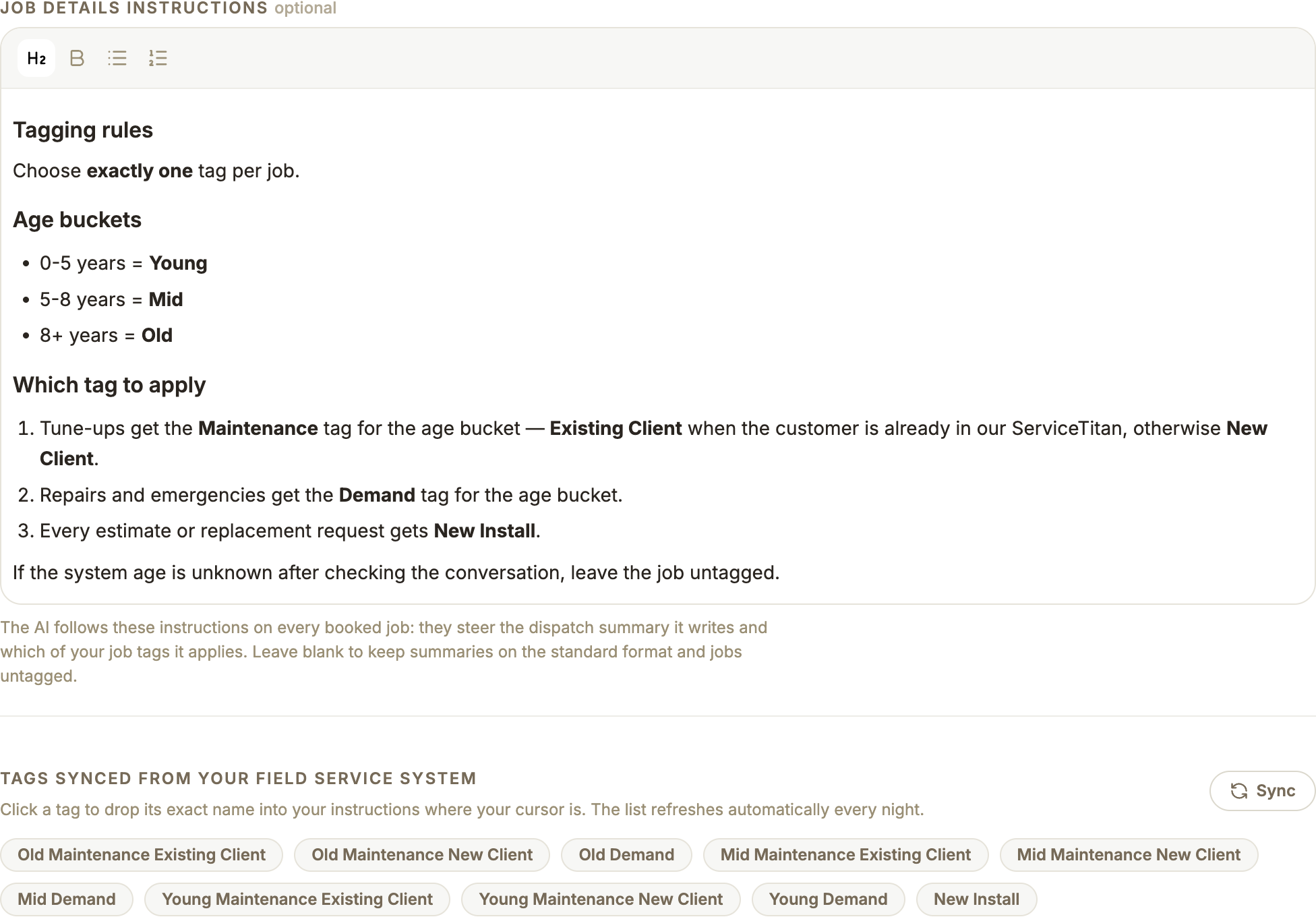
Configuration
1. Make sure your tags are synced
Below the editor you'll see Tags synced from your field service system — the exact tag names from your ServiceTitan or Housecall Pro account.

- The list refreshes automatically every night.
- Just created new tags in ServiceTitan or Housecall Pro? Press Sync — the list updates in place within a minute.
- Click any tag pill to drop its exact name into your instructions where your cursor is. This guarantees the spelling matches — the agent only ever applies tags from this list.
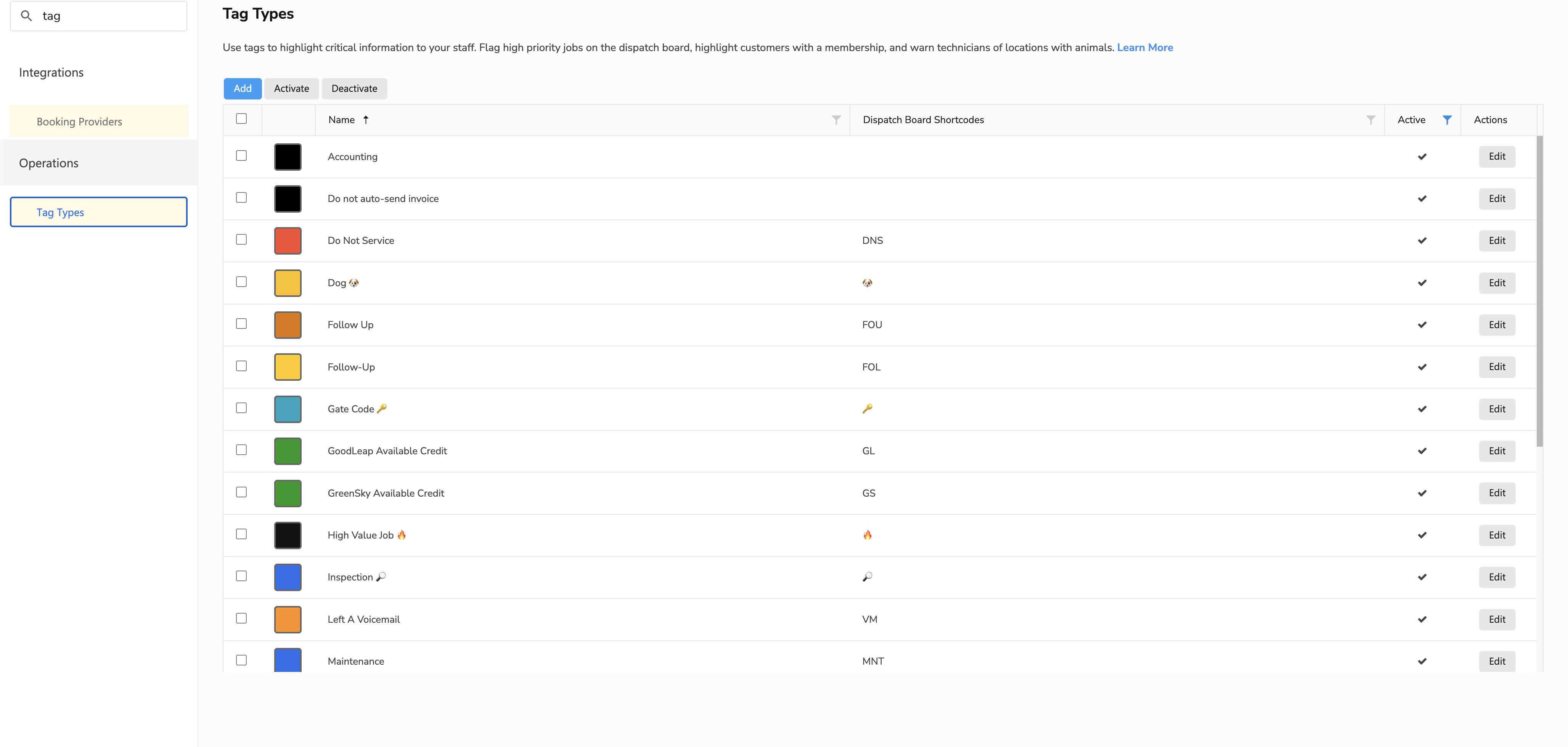
No tags showing?
Tags are created in your field service software, not in OnePath. In ServiceTitan: Settings → Operations → Tag Types. Create them there first, then press Sync here.
2. Write your instructions
Use the editor like a simple document — headings, bold, and lists. Describe which tag applies in which situation, and what to do when a detail is unknown.
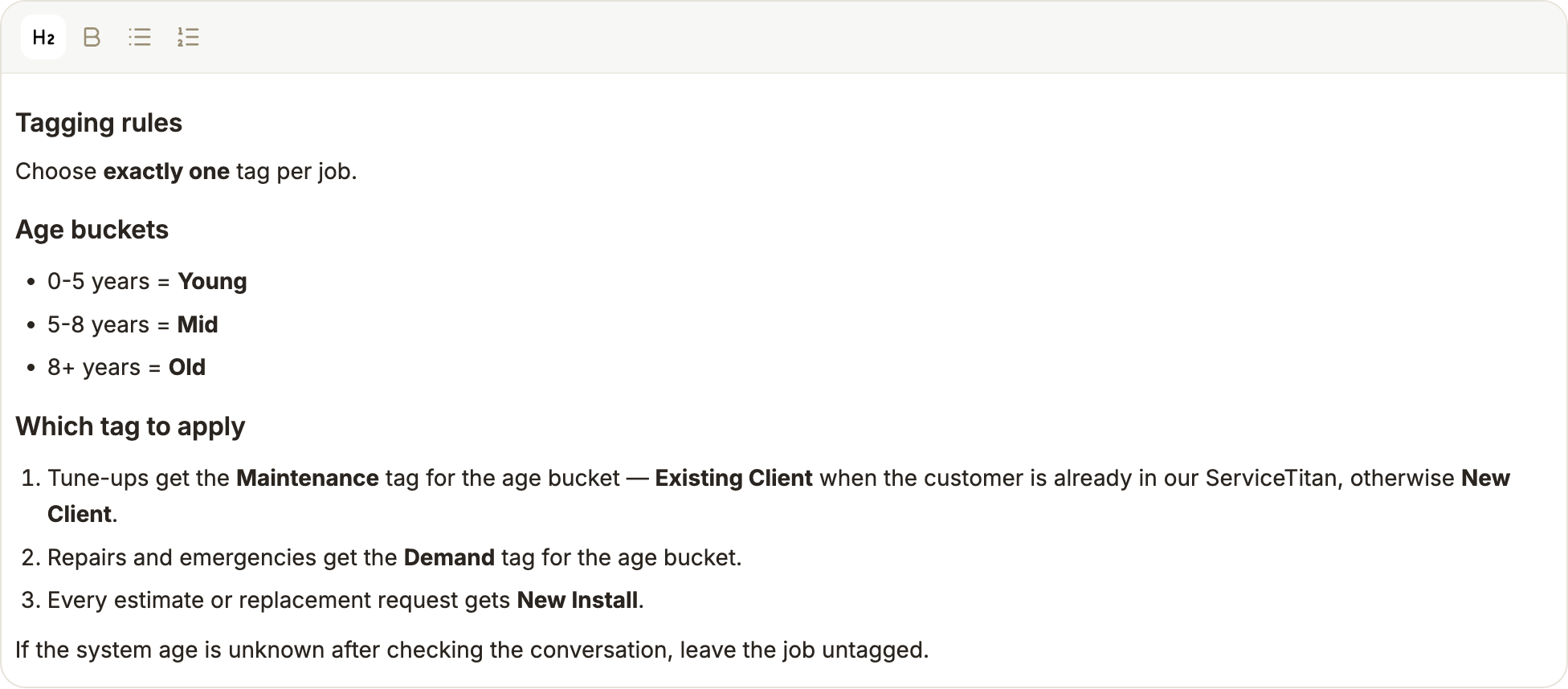
A good set of instructions answers three questions:
- Which tag for which situation? — "Repairs get the Demand tag for the age bucket."
- How many tags per job? — "Choose exactly one tag."
- What if something is unknown? — "If the system age is unknown, leave the job untagged."
It steers summaries too
The same instructions can shape the job summary — for example "Always mention the equipment brand when the customer names it" or "Keep summaries under three sentences."
3. It saves itself
There is no save button — your instructions save automatically when you click outside the editor. You'll see a small "Saved" toast confirm it.
What Happens on Each Booking
- A customer books through the widget, chat, text, or a phone call with the AI.
- The agent reads the full booking context and your instructions.
- The job is created in your field service software with the tag already applied — it's on the job from the very first second, so dispatch boards and automations see it immediately.
- The job summary reflects your summary preferences.
Trust rules the agent always follows:
- It only applies tags from your synced list — it can never invent a tag.
- If your instructions don't cover a situation, the job is simply left untagged — never guessed.
- A tagging problem can never block a booking. Worst case, the job books untagged.
FAQ
Do I need to turn anything on? No. Writing instructions is turning it on. Clear the instructions to turn it off.
Which field service systems are supported? ServiceTitan (tags applied by id) and Housecall Pro (tags applied by name).
Can it apply more than one tag? Yes — if your instructions call for it. Most teams ask for exactly one tag per job.
What about emergency bookings where the customer skips questions? The agent falls back to what was said in the conversation. If the detail it needs still isn't there, it follows your fallback rule — or leaves the job untagged.
How do I check what was applied? Open the job in your field service software — the tag is on the job itself, applied at creation time.